Hokitika Gorge is a free, year-round scenic reserve about 33 km (roughly a 30-minute drive) inland from Hokitika, where the Hokitika River runs an unlikely turquoise through a granite gorge. The main walk is short — DOC lists it as 1.2 km one way, around 45 minutes, and most people are back at the car in 45 to 60 minutes.
Add the drive each way and you’re looking at a half-day, which leaves plenty of time for something else afterwards.
Where is Hokitika Gorge and how do you get there?
The gorge sits in the Hokitika Gorge Scenic Reserve, inland and slightly south-east of Hokitika township. It’s signposted from the junction of SH6 and Stafford Street near the town centre, and again at every intersection on the way, so you don’t need to memorise the route.
For the record, it runs Stafford Street to Kaniere Road, then Kaniere–Kowhitirangi Road, then Whitcombe Valley Road.
Ignore anything that tells you to head east on SH6 — that’s wrong, and it will cost you half an hour. From Greymouth, allow about an hour in total.
The road is sealed and perfectly manageable in a campervan, though it narrows in places and there are farm vehicles about. Take it gently.
How long is the Hokitika Gorge walk?
DOC rates it an easy short walk: 1.2 km one way, about 45 minutes return to the car park via the upper suspension bridge. In practice, most visitors report 45 to 60 minutes once you factor in the stopping, the staring and the photos.
The round trip including the viewing platforms comes out around 2.2 km for most people.
The track is well formed with several viewing platforms along it, and the walk is as much about the sequence of views as any single one. There are no picnic tables on the trail itself — the only ones are back near the car park.
What about the swing bridges?
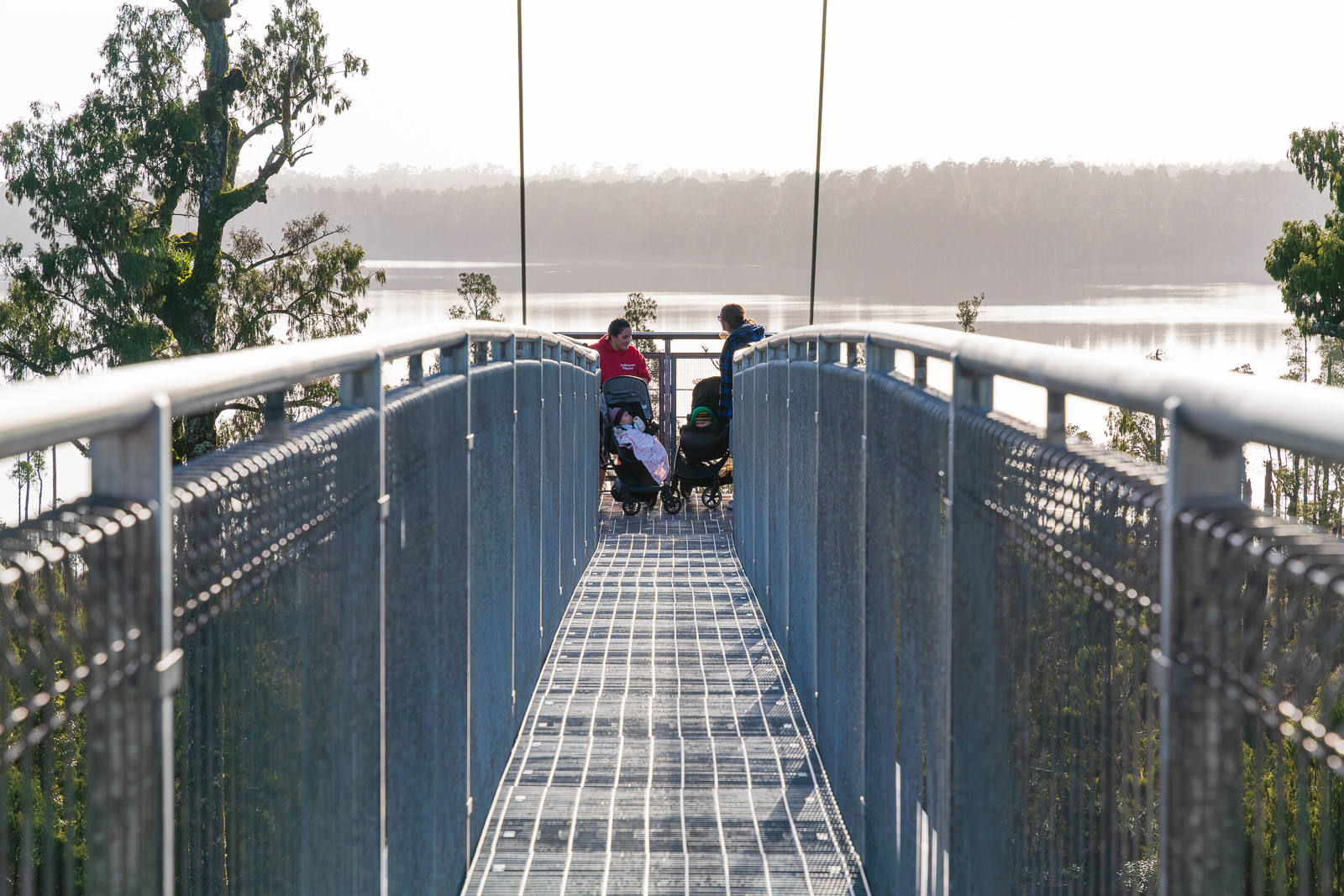
The upper suspension bridge opened in August 2020 and is a genuine highlight: at 90 metres it’s one of the longest in New Zealand, crossing upstream of the old bridge and leading out through the treetops on an island mid-river. It’s about a 15-minute walk from the track junction.
The lower bridge has a much longer history. A simple suspension bridge for people and stock opened here in October 1933, funded jointly by the government and Westland County Council, after the Kokatahi Dairy Co-operative decided at its 1930 AGM that farmers needed a way to get their cream across to the factory. It also gave gold miners access up the Whitcombe Valley.
That historic bridge was closed by Westland District Council on safety grounds, and at the time of reporting its replacement had not been finalised. This matters, because almost every guide online still describes a tidy two-bridge loop. Check the alerts section of the DOC page for the Hokitika Gorge Walk before you go — it’s the only source that will be current.
Why is the water at Hokitika Gorge so blue?
The colour comes from rock flour — extremely fine sediment ground off the bedrock by glaciers upstream. The particles are so small they stay suspended in the water rather than settling, and they scatter sunlight in a way that produces that glowing turquoise. The gorge itself was carved out of granite by the river.
Which brings us to the honest bit most guides skip.
When is the gorge at its best?
After a stretch of settled, dry weather. That’s when the colour is most vivid. After heavy rain the river runs high and the water can turn a duller, milky grey as sediment levels shift — still impressive, but not the postcard.
Late morning on a clear day, with the sun more or less overhead, tends to bring the colour out strongest.
This is the West Coast, so rain is part of the deal. If you’ve got a few days in the area and one of them is clearly better than the others, save the gorge for that one.
Hokitika Gorge parking: is it free, and will I get a park?
Parking is free, with plenty of room for cars and campervans, and there are basic drop toilets at the car park. From there it’s a short stroll to the first viewing platforms and the start of the track. A few picnic tables sit near the car park too.
The catch is timing. The car park fills quickly through the peak season from December to March, and there has been genuine concern locally about congestion on the track as well, particularly with tour buses. Early morning or late afternoon is a far nicer experience than the middle of a January day.
Can you swim? And what about sandflies?
Plenty of locals do swim, but be realistic: the water is icy even in summer, and it’s fed by glacial melt. Check conditions and don’t go in when the river is up.
And yes, there are sandflies. This is the Coast. Bring repellent, and don’t stand still in one spot for too long while you fiddle with your camera settings.
Is Hokitika Gorge accessible?
Sources disagree, which is frustrating if you’re planning around a wheelchair or a pram. DOC and trail listings describe it as accessible with assistance, while some travel sites report steps, uneven ground and narrow sections.
What’s consistent is that the viewing platforms close to the car park give you a view without committing to the full track. If access is essential to your day, ring DOC and ask about current conditions.
What to do after the gorge
Here’s the practical reality nobody tells you: the gorge walk is 45 to 60 minutes, plus about 30 minutes’ drive each way. That’s a half-day, not a full one. You’ll be back on the main road by early afternoon wondering what’s next.
That’s where we come in. West Coast Treetop Walk & Zipline sits at 1128 Woodstock-Rimu Road, 15 minutes south of Hokitika in the Mahinapua Scenic Reserve — not far off the route back. Allow about 45 minutes’ drive from the gorge car park, back through Hokitika.
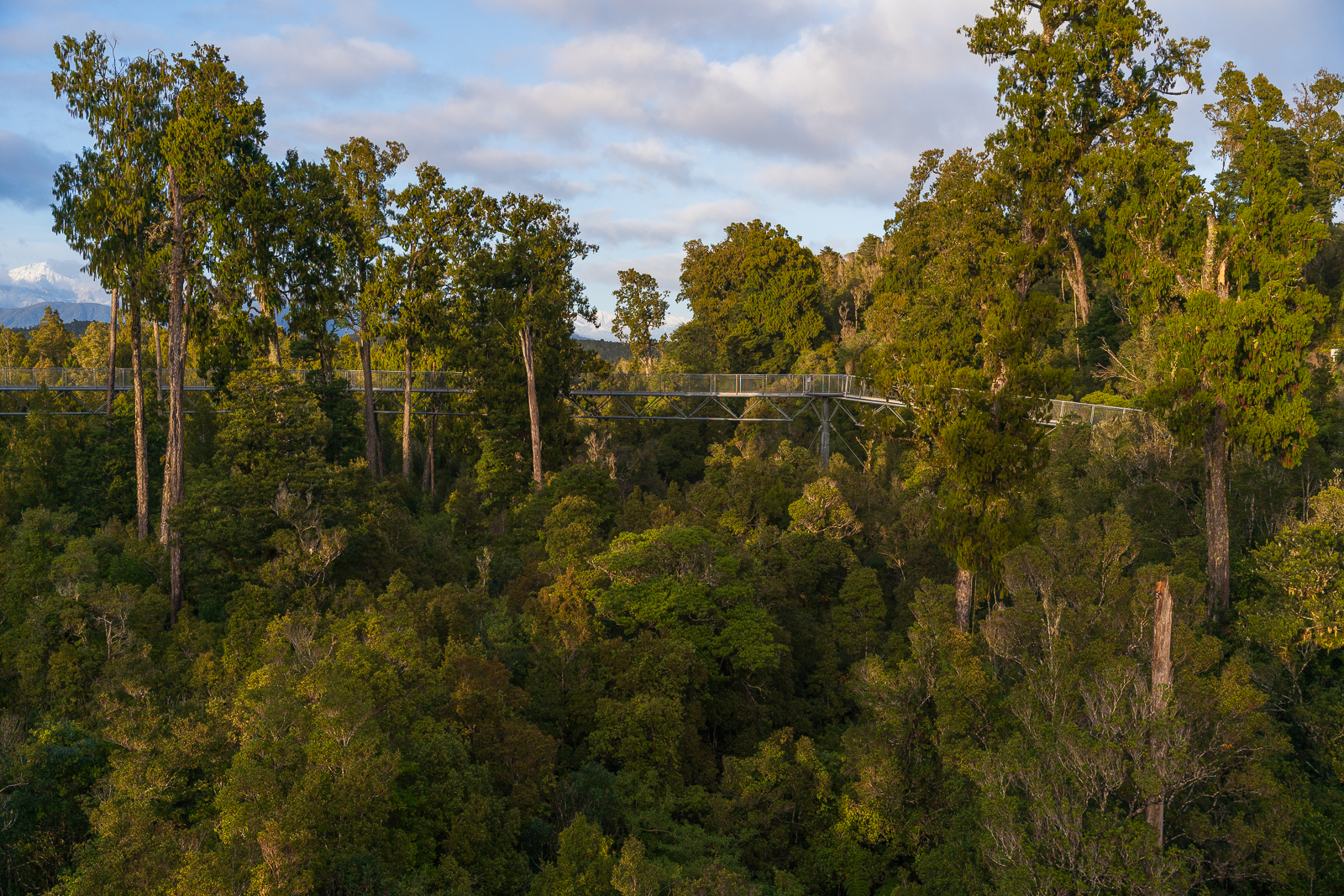
The treetop walkway takes you 20 metres up into the canopy of native rimu and kamahi — a completely different way of seeing the same forest you’ve just walked beside at ground level. The 47-metre tower lifts you clear of the canopy altogether, with views out to the Southern Alps on one side and the Tasman Sea on the other.
The walkway is wheelchair- and pram-friendly, with most sections fully accessible, and we’re Hāpai Access Card certified, with free entry for essential companions. Treetop Walk entry starts at $43 per adult at the gate, with 10% off when you book online.
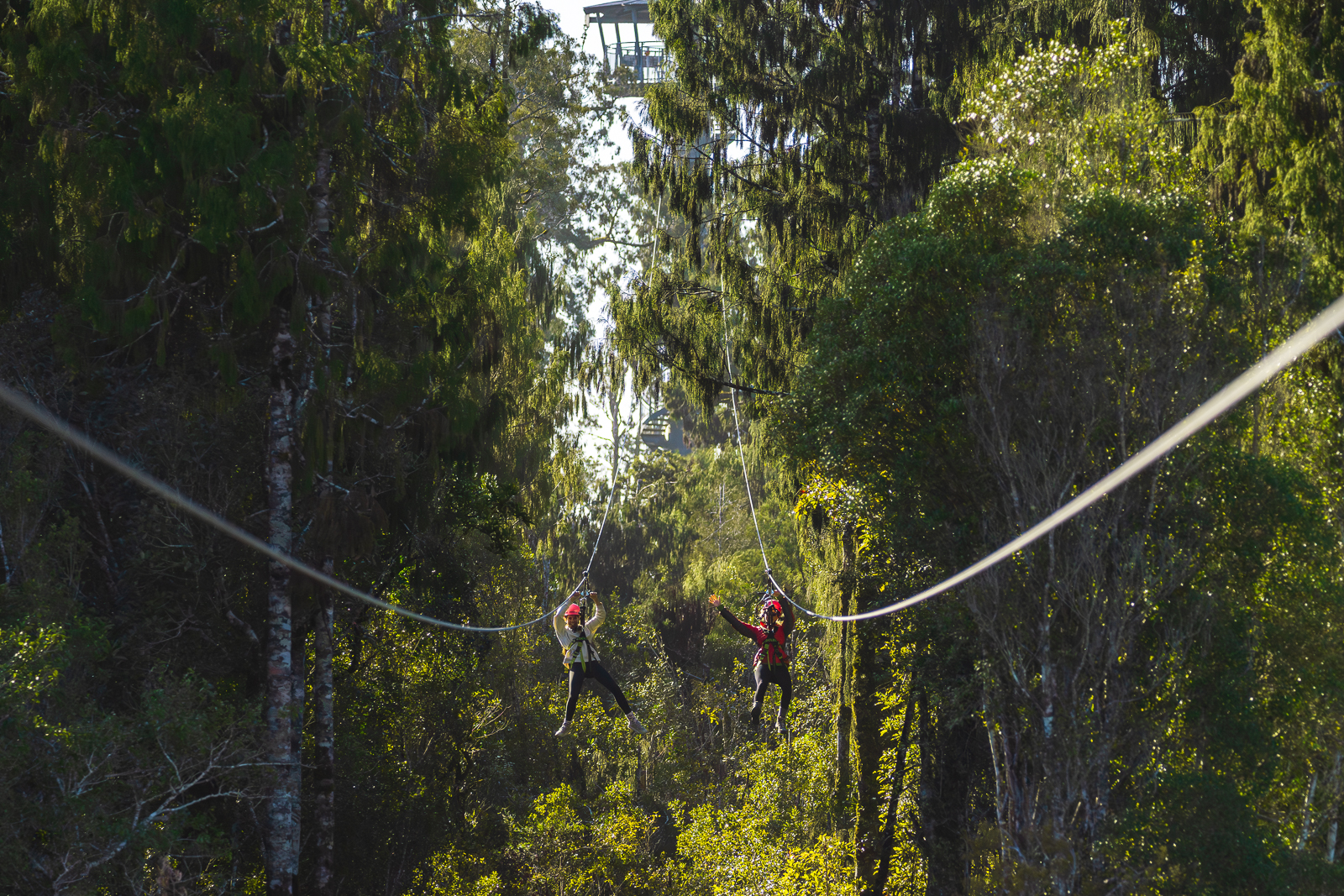
If the gorge has left you wanting something with a bit more adrenaline in it, the dual zipline runs two riders side by side at speeds up to 65 km/h. Riders need to weigh between 30 and 120 kg, and ziplines run hourly from 10am. Tower Zipline & Treetop Walk packages start at $139 per adult.
Timing the two together
Gorge in the morning, treetops in the afternoon works well — but mind the clock. Our hours are seasonal: 9am to 5pm in summer with last access at 4.15pm, and 9am to 4pm in winter with last access at 3.15pm.
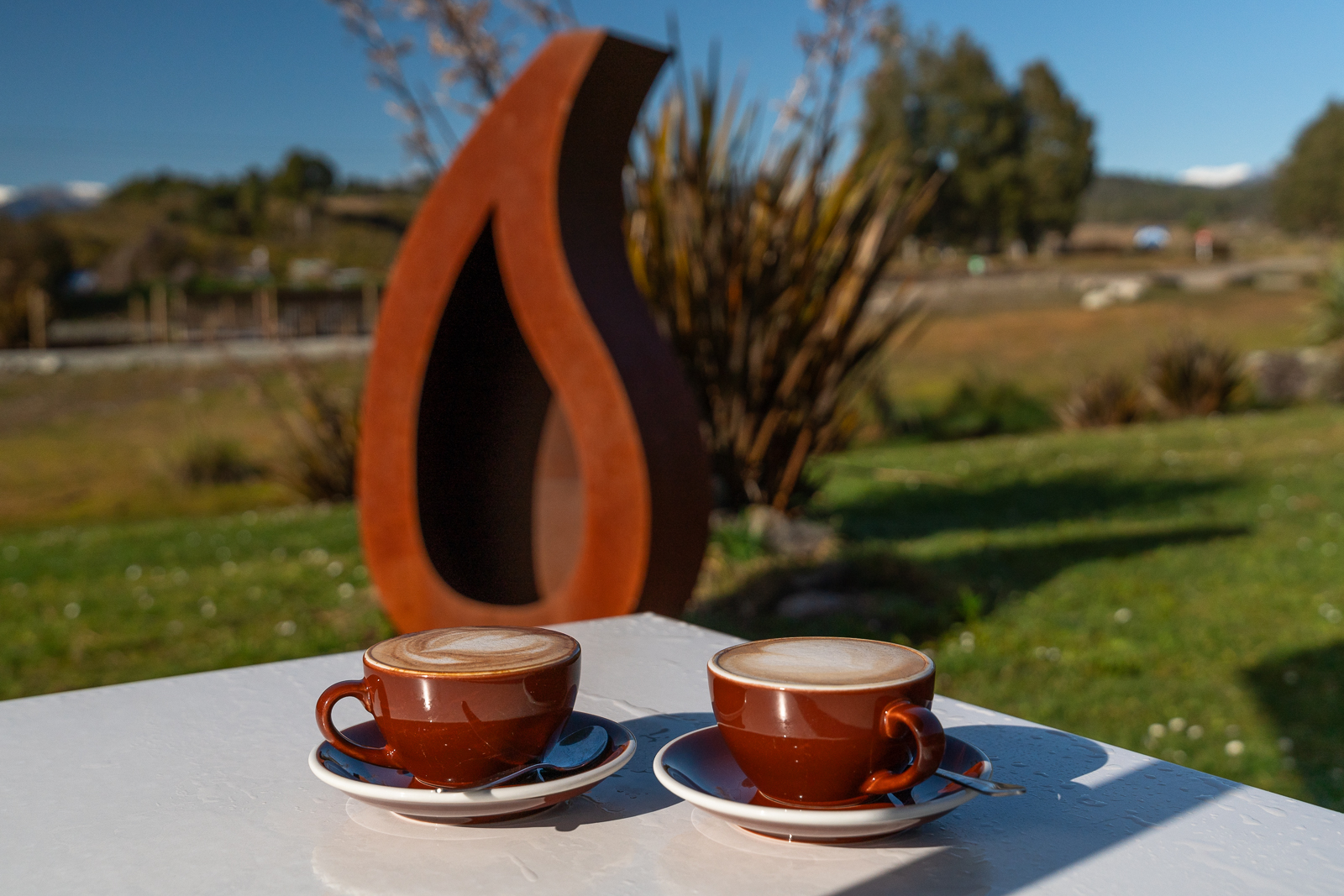
The West Coast Treetops Cafe closes at 3pm, so if you want a coffee and something simple to eat after the walk, don’t leave the gorge too late.
The walkway is a 1.2 km self-guided loop, so you can take it at your own pace. Allow extra time if you are climbing the tower.
Frequently asked questions
Is there an entry fee for Hokitika Gorge?
No. It’s a DOC scenic reserve, free to visit, open year-round during daylight hours. Parking and toilets are free as well.
How far is Hokitika Gorge from Hokitika town?
About 33 km, which takes roughly 30 minutes by car. It’s signposted the whole way from the SH6 and Stafford Street junction. From Greymouth, allow about an hour.
Can I cross both swing bridges?
The 90-metre upper bridge, opened in 2020, is the main crossing. The historic 1933 lower bridge was closed on safety grounds by Westland District Council. Check the DOC alerts for the track before you travel, as the situation may have changed.
Will the water always be that bright blue?
No, and anyone who says otherwise hasn’t been here in the rain. The turquoise is at its best after settled, dry weather. After heavy rain the river runs high and can look milky grey instead.
Can I do the gorge and the Treetop Walk in one day?
Easily. The gorge is a half-day at most, and the Treetop Walk is on the south side of Hokitika on your way back. Just check our seasonal last-access times — 4.15pm in summer, 3.15pm in winter — and remember the cafe closes at 3pm.