This guide explains the rimu tree in New Zealand, covering its growth, ecological role and cultural significance, and where you can experience an ancient rimu forest on the West Coast.
Driving through the South Island often means travelling through dense native forest. Look up, and you will see trees that have grown for centuries.
Unlike typical native bush, these trees grow beyond the canopy. These slow-growing trees play a key role in the West Coast ecosystem.
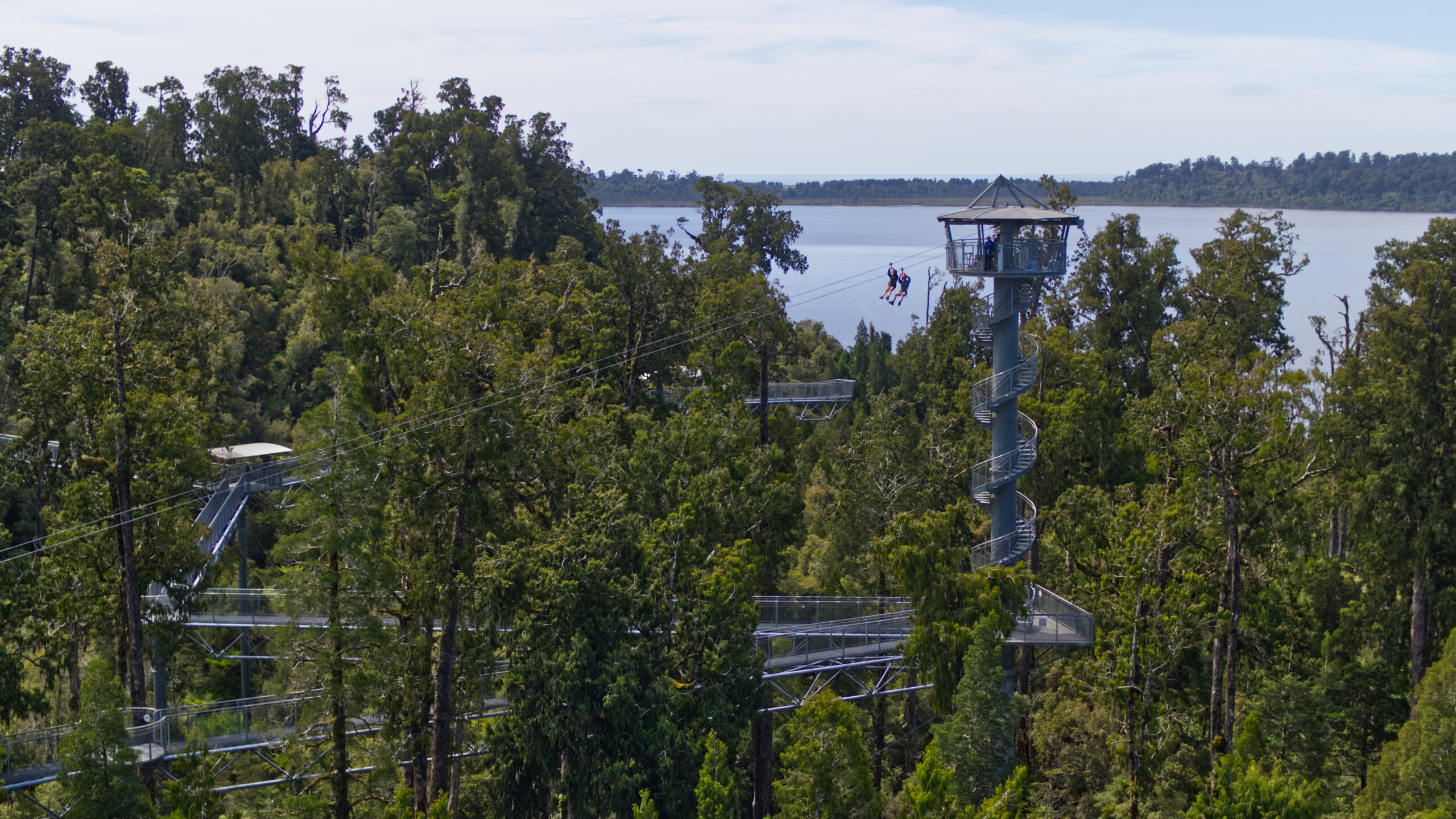
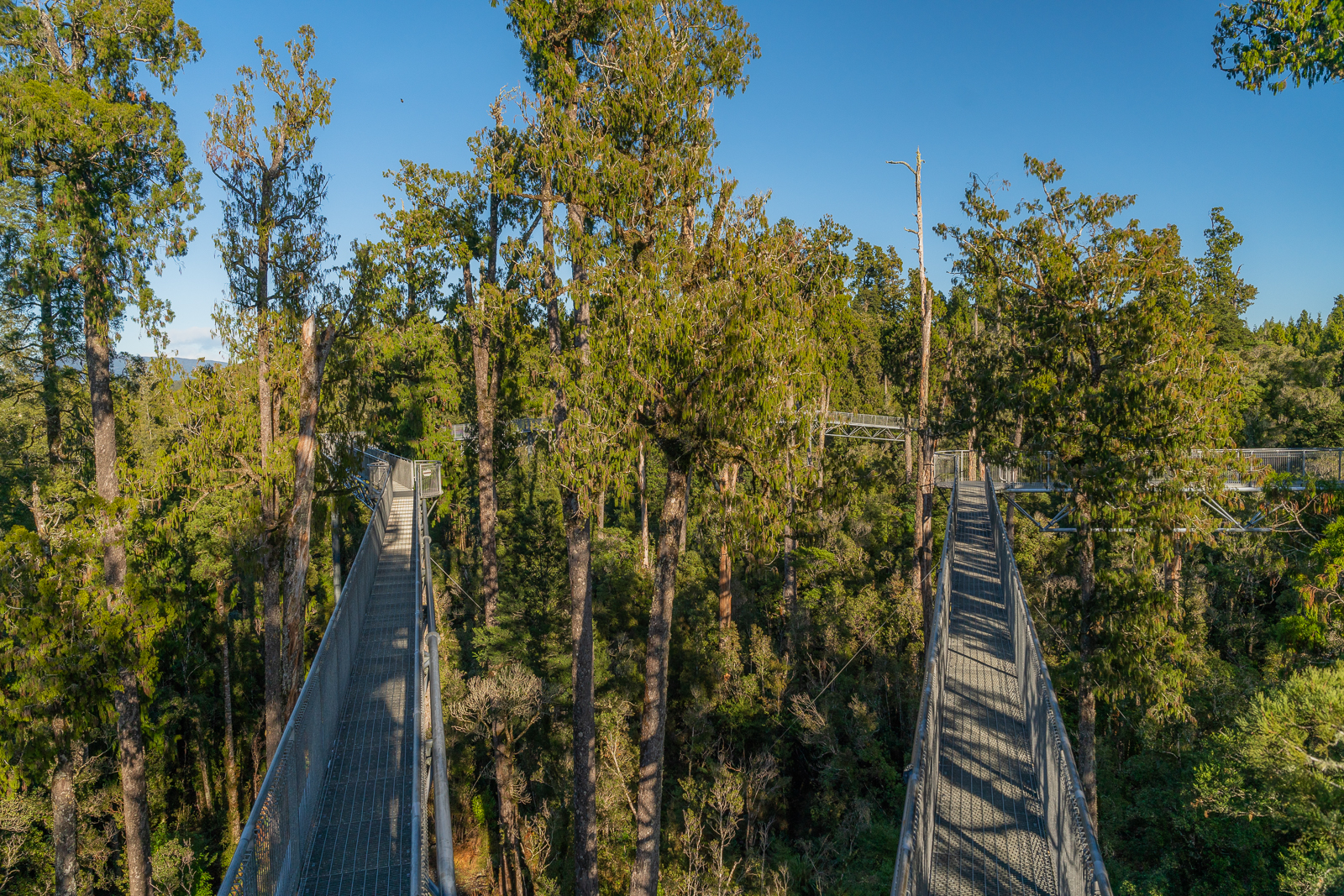
Our 600-metre steel walkway takes you 20 metres directly into this airborne world to touch the flaky bark of these ancient conifers. Seeing the canopy up close gives you a clearer sense of the forest’s scale at West Coast Treetops.
What Makes The Rimu Tree a Forest Giant
Known scientifically as Dacrydium cupressinum, this evergreen conifer is a true survivor. Young saplings have an elegant, conical shape with weeping branches.
As they mature over the centuries, they develop into towering emergent trees – meaning they grow right past the main forest roof, reaching heights of up to 60 metres with straight trunks spanning 1.5 metres across.
These conifers take their time, often needing 400 years just to hit maturity. Once they do, they easily survive for a millennium. Their sprawling branches gather thick layers of moss and epiphytes, building high-altitude homes for native short-tailed bats and nesting birds.
How Māori Tradition Honours The Deep Red Timber
The life force of this plant is deeply woven into local history. In Māori tradition, the rich red colour of the gum and heartwood symbolises the blood of Tunaroa, a legendary giant eel slain by the demigod Māui.
The wood itself is incredibly dense, packed with aromatic oils, and holds a beautiful dark grain. Historically, carvers used it to build large waka canoes and durable tools.
It also played a huge role in traditional healing; the charcoal soot was mixed into pigments for moko facial tattoos, and the fragrant smoke from burning the wood was used to clear spaces of bad spirits.
Why Local Wildlife Relies on the Rare Fruiting Cycle
One of the most fascinating traits of this giant is its unusual reproduction cycle. Instead of producing fruit every year, it follows an irregular cycle. Every few years, it produces a large fruiting cycle of nutrient-dense red berries.
The survival of the critically endangered kākāpō parrot relies entirely on this specific food source. When the tree finally drops its fruit, this increase in food availability acts as a biological trigger.
It also sustains huge flocks of native wood pigeons (kererū) and other local wildlife through the colder seasons.
Where to See These Native Trees Up Close on the Coast
While they are found from the North Island all the way down to Stewart Island, the wet rainforests along the rugged western shoreline are where these ancient ecosystems truly thrive.
While you used to find this golden-red timber in heritage homes and high-end furniture across the country, logging is now strictly controlled. Today, these trees are rightfully protected on public land to preserve what is left of our indigenous biodiversity.
The best way to understand their scale is not by looking at a finished product – it is by getting off the ground and walking directly through their crowns.
Experience the scale of the rimu tree in New Zealand from above. Book your West Coast Treetops visit and explore the forest canopy at your own pace.
FAQS
What type of tree is rimu?
Dacrydium cupressinum, commonly known as rimu, is a slow-growing evergreen conifer belonging to the Podocarpaceae family. Native to New Zealand, it is classified as an “emergent” species because it grows right past the main forest canopy, reaching heights of up to 60 metres with distinct weeping branches and flaky, reddish-brown bark.
How can you estimate the age of a rimu tree?
The bark of a Rimu is a good indicator of its age. Young trees will have smoother bark, but as they mature, the bark becomes flaky and a dark reddish-brown colour. This bark sheds in large flakes, leaving a wavy, textured pattern on the trunk.
What does Rimu wood look like?
Appearance: Heartwood is usually a rich red-brown colour with hints of golden yellow. Sapwood has a lighter brown tone and is generally even in colour. The intermediate colour zone is a varied light brown colour, giving rise to interesting shadings of colour and grain.