
Nervous about taking that first leap off our launch platform? Never fear. West Coast Tree Tops offers a guided adventure designed to help first-time riders feel prepared for their zipline tour. Knowing exactly what to expect before your tour can help you relax and soak in the spectacular canopy views.
- What happens during the safety briefing
- Proper clothing and footwear choices
- Operator safety and weight requirements
- Views from the 47-metre launch tower
It’s completely natural to feel a little unsure before your first zipline tour, especially when you don’t know exactly what to expect. At West Coast Tree Tops, our guides are there to support you from the moment you arrive, taking care of all the technical details so you can feel confident, supported and ready to enjoy the adventure to the fullest.
If you are looking forward to ziplining in New Zealand but still feeling a little unsure, a bit of preparation can go a long way! The good news is you do not need any prior training. Your guides will fit your harness, check your gear and lead you up the 106 steps to the launch platform.
Why a Zipline Tour is One of the Best Things to Do on the West Coast, NZ
The West Coast of New Zealand’s South Island is world-famous for its rugged landscapes, ancient rainforests and untamed beauty, and there is no better way to immerse yourself in it than from above. A West Coast zipline tour offers a unique perspective that you simply can’t get from a standard walking trail.
As you soar above the temperate canopy, you get an exhilarating, front-row seat to one of the country’s most pristine environments. Combining thrill with breathtaking panoramic views, taking on a New Zealand zipline experience on the Coast is an absolute must-add to any Kiwi road trip itinerary.
What Happens During Your New Zealand Zipline Experience?
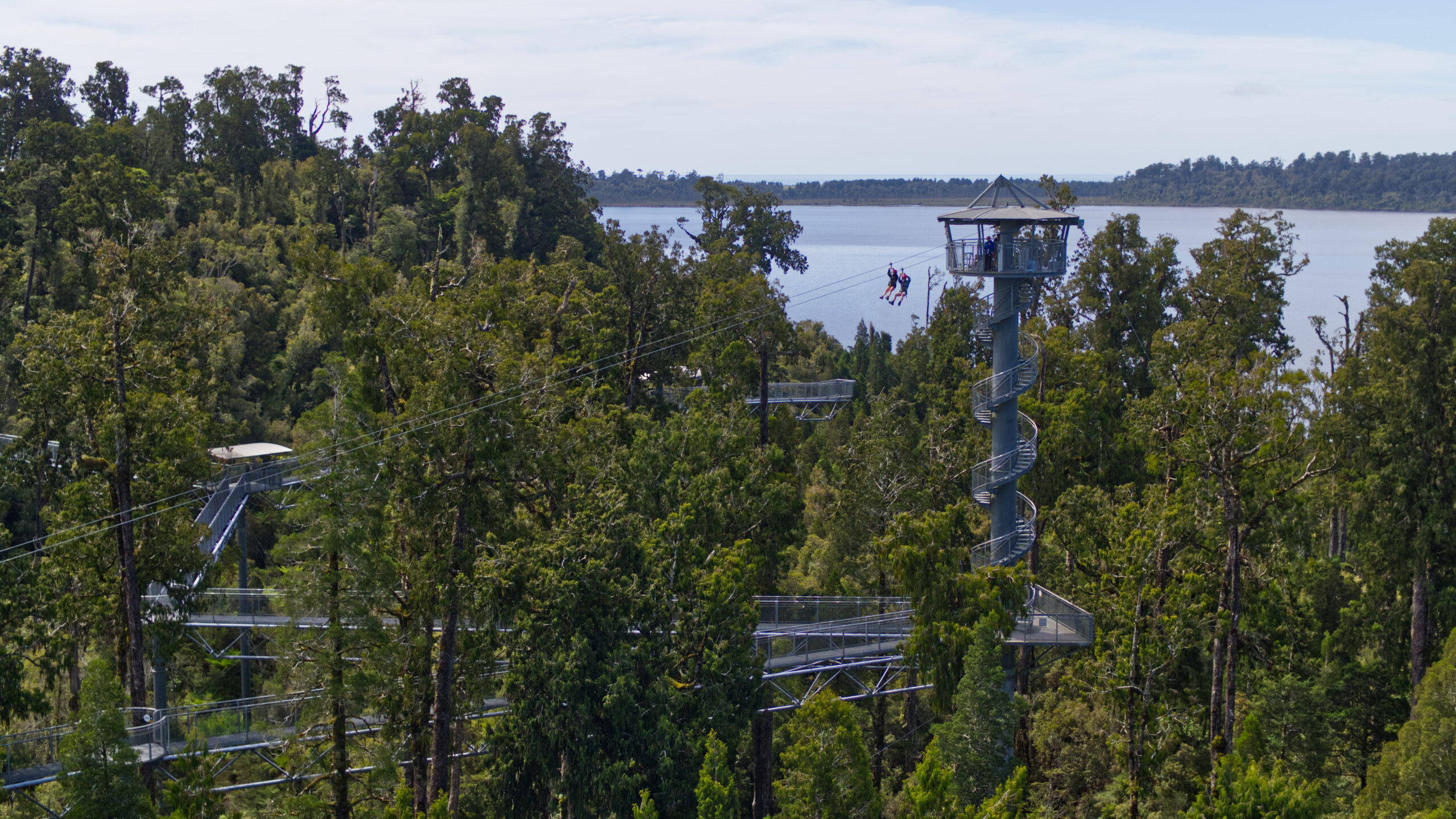
Unlike many zipline courses that begin lower to the ground, this dual zipline launches from a 47-metre tower, placing you around 15 storeys above the forest floor. Before you clip in, you’ll have a moment to pause, take a breath and really soak in the view. From the top, you can see the ancient rimu forest, Lake Mahinapua, the Southern Alps and the Tasman Sea stretching out around you.
Then, when you’re ready, you’ll have the option of launching side by side with a friend to fly through the treetops at speeds of over 60 km/h.
What To Wear Ziplining In The Rainforest?
Dressing for the West Coast means being prepared for quick weather changes. The right clothing and footwear keep you comfortable and secure in the harness.
- Wear sturdy, closed-toe shoes with secure soles.
- Choose long trousers or activewear to prevent friction from the harness.
- Pack a light, windproof rain layer.
- Tie back long hair and remove any dangling jewellery.
- Empty your pockets so nothing can fall into the forest below.
How Does Zipline Safety Actually Work?
Safety is built into every part of the operation. In New Zealand, adventure activity providers operate within a strict safety audit and registration framework, giving you extra peace of mind before you even step onto the platform.
On the course, your guides take care of clipping you in and out, checking your gear and guiding you through each stage of the tour. All you need to do is listen to their instructions, sit back and let gravity do all the work. To participate safely, riders must weigh between 30 kg and 120 kg.
Ready for your first New Zealand zipline experience? Book your zipline tour at West Coast Tree Tops and secure your flight time today.
FAQS
Do I need experience to join a zipline tour?
No prior experience is necessary. Your guides provide a full safety briefing, fit your equipment and manage all the technical aspects of the flight.
What happens if it rains during my booking?
Zipline tours may operate in wet weather, but conditions are assessed by the team. Operations may be paused or changed when weather conditions affect the experience or safety of participants.
Are there weight limits for the zipline?
Yes, all participants must weigh between 30 and 120 kg to meet strict safety and operational requirements for the dual zipline system.