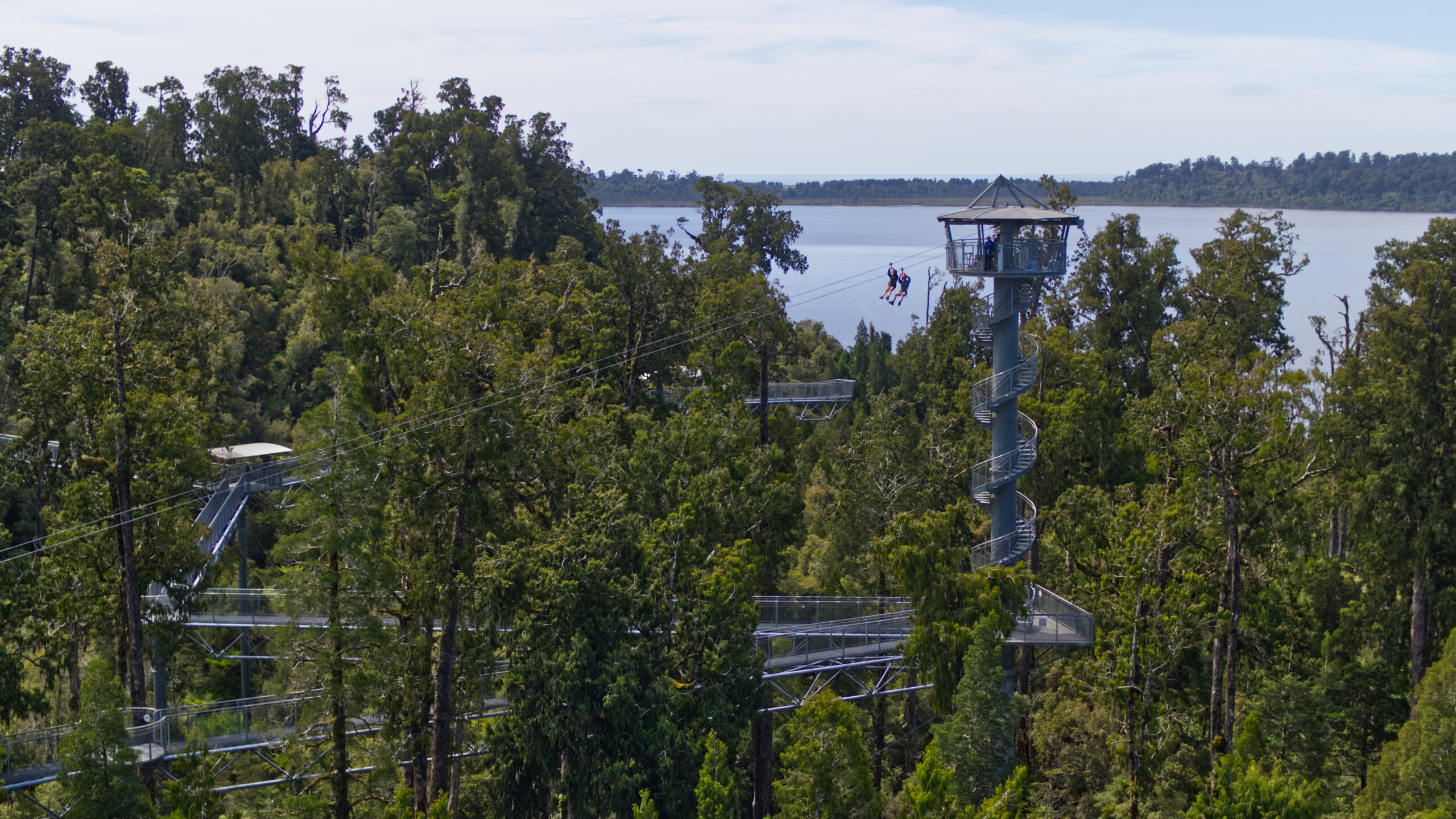
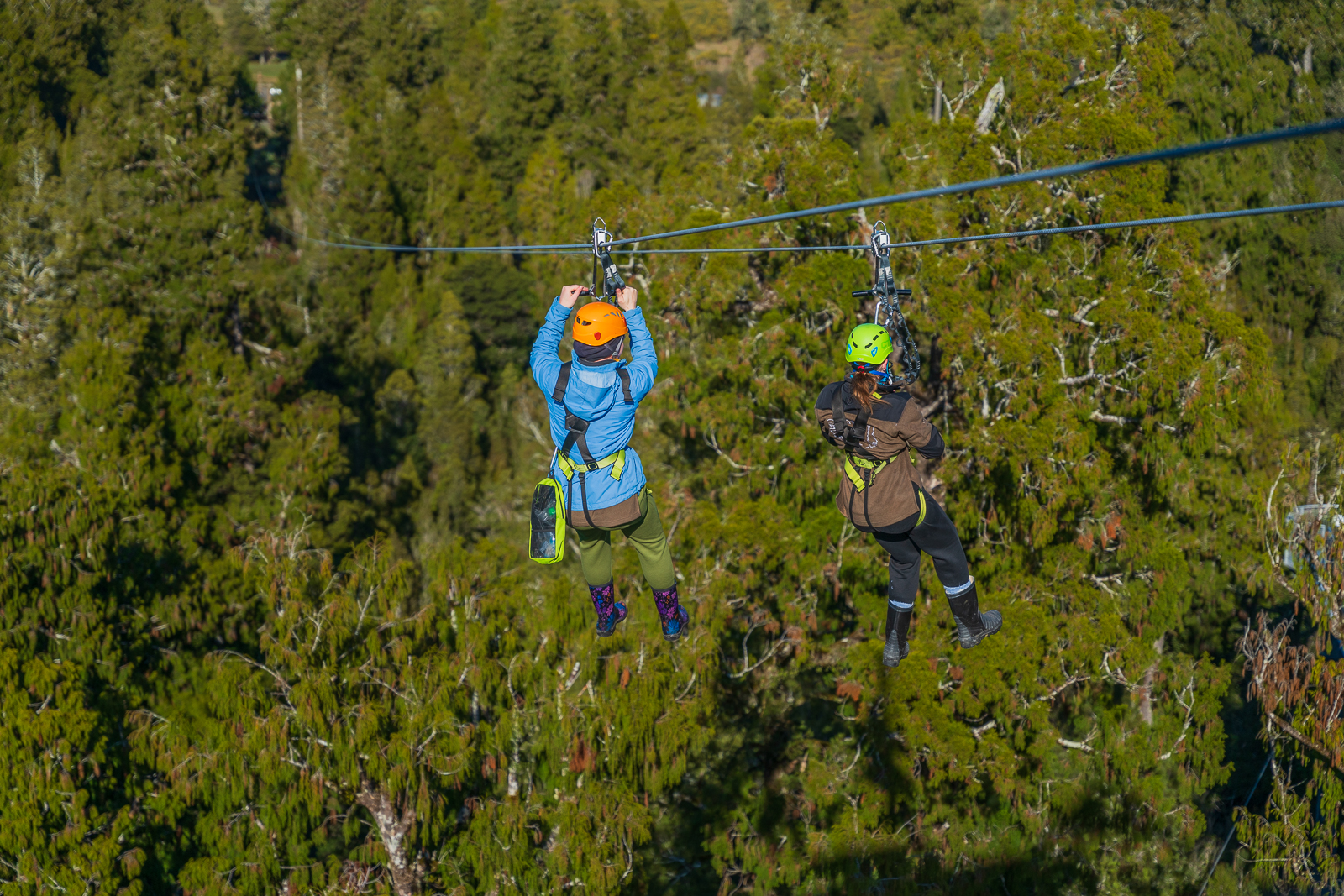
Elevated walkways offer a completely different way to experience the forest. Instead of watching your footing, you can enjoy an immersive canopy walk experience among ancient treetops, breathtaking views and native birdlife at West Coast Treetops.
Staring at your boots while dodging muddy puddles on a ground trail often means missing the actual wildlife hiding above you. Standard hiking usually keeps you trapped in the dark understory of the forest.
When you finally step off the dirt and climb into the branches, the entire environment shifts around you.
At West Coast Treetops, we often see visitors pause in amazement the second they walk out over the canopy. Being suspended twenty metres in the air forces you to notice the shifting light, the singing birds and the swaying leaves instead of just focusing on your next step.
Hunting down the best forest adventure experiences means looking past the dirt trails and getting up into the branches.
Stepping Straight Into The Living Roof
The upper canopy is one of the most biologically active parts of the forest, where much of the photosynthesis, flowering and fruiting takes place.
Looking up from the dirt means you barely catch a glimpse of this active world.
Using a steel walkway to reach the treetops puts you right in the middle of the action. You get to watch native birds feeding and interact with sunlit foliage that simply does not exist on the dark forest floor.
Viewing The World From A Bird’s Perspective
Scaling a mountain usually takes hours of heavy climbing just to get a decent view. Modern high-altitude structures bypass that physical strain entirely.
Standing on a suspension bridge completely changes your sense of scale because you are suddenly eye-level with massive ancient branches.
The subtle sway of the platform in the wind heightens your senses, forcing your brain to slow down and actually process the massive drop below you.
This physical immersion creates a deeply mindful state that ground hiking rarely achieves.
How Other Countries Highlight Their Canopies
New Zealand is not the only place taking visitors up into the clouds. Forest engineers across the globe build incredible structures to highlight their specific native environments. These well-known places to visit in South Africa show how popular elevated forest experiences have become around the world:
- Walking through the Valley of the Giants in Western Australia gets you a close look at 400-year-old tingle trees standing 40 metres high.
- Crossing the dense Monteverde cloud forest in Costa Rica uses a series of high suspension bridges to bridge deep tropical canyons.
- Walking through the Inkaterra jungle in Peru places you a quarter-mile deep into the upper levels of the South American rainforest.
- Climbing the Kakum National Park bridge in Ghana takes you over 130 feet above the jungle floor to spot exotic African wildlife.
- Visiting the Bavarian Forest National Park in Germany reveals the longest high-altitude path in the world, ending in a massive 44-metre viewing tower.
- Navigating the Hainich National Park canopy in Germany gives you an unrivalled view over the Thuringian Basin.
- Drifting through the Ulu Temburong National Park in Brunei requires taking a boat just to reach the incredible 50-metre-high steel structure.
Experience New Zealand’s elevated walkways from a whole new perspective at West Coast Treetops. Leave the forest floor behind, explore the ancient Rimu canopy and enjoy a safe, accessible treetop walk unlike any ordinary hike. Book your tickets online today and discover one of the West Coast’s most unforgettable nature experiences.
FAQS
What makes an elevated trail different from hiking?
A raised platform takes you out of the dark undergrowth and puts you directly into the sunlit canopy. This shift in height gives you access to a completely different layer of wildlife and plant growth.
Are these high suspension bridges physically safe?
Yes. Modern structures use heavy steel engineering to hold massive amounts of weight safely. They often feature gentle slopes and wide decks to accommodate wheelchairs and strollers easily.
Why do people feel more relaxed in the trees?
The gentle sway of the bridge and the wide open views naturally force your brain to slow down. Getting away from ground-level noise helps you focus on the sounds of the wind and the birds.
Are elevated walkways suitable for children and older visitors?
Yes. The elevated walkway is designed to be accessible for a wide range of visitors, including families, older adults and wheelchair users. The main walkway is flat and easy to navigate, allowing everyone to enjoy the forest canopy comfortably.