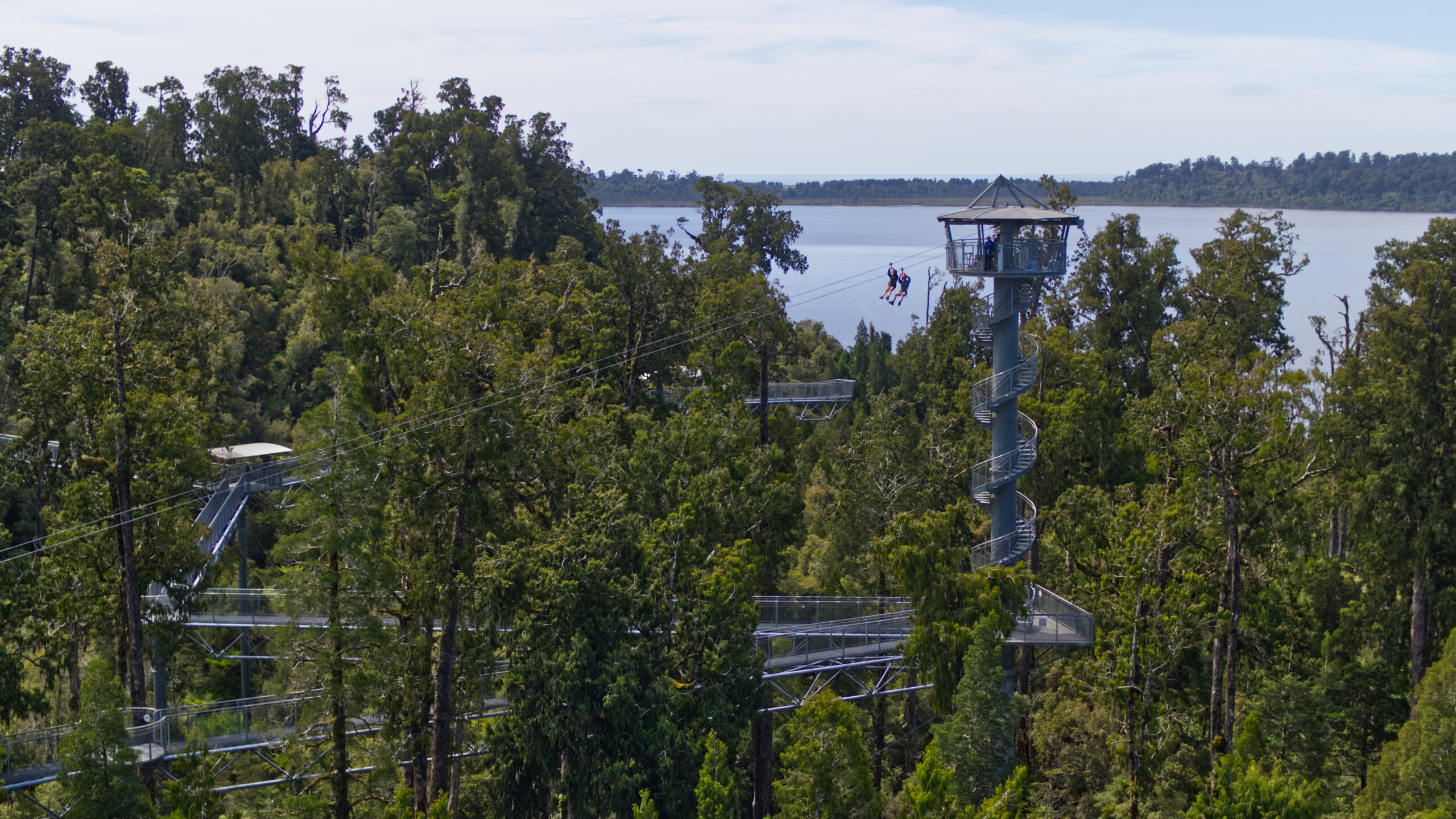

If you’re a nature lover, you’ll be blown away by the rich diversity of the West Coast Forest ecosystem on New Zealand’s South Island. Some of these ancient native forests have been around for thousands of years!
Here are some of the incredible native critters and tree species that reside in these forests, so you can get a better idea of the region’s unique ecosystems.
Insects
Just like you would expect from any thriving ecosystem, the forests of the West Coast are home to the native wētā, batfly, mānuka beetle, among others.
Tree Species
The West Coast forest’s tree species are arguably the showstoppers:
- Tōtara – This reddish/grey bark tree reaches heights of 20-25 metres and is dioecious, meaning there are separate male and female trees. Females produce edible, sweet, red fruit that ripens over a year, while the males have pollen cones that develop in spring. As a culturally revered tree by the Maori, you might have heard this proverb: Kua hinga te totara i te wao nui a Tane, which is used in honour of a mighty community member who has passed on.
- Rimu – The Rimu is an endemic New Zealand tree renowned for its longevity and impressive stature. These trees can live for over a millennium and tower up to 50-60 meters tall! Their unique leaves resemble scale-like structures that droop down from the branches. The trunks of older Rimu trees often exceed 1.5 meters in diameter.
- Miro – Miro trees reach 25-30 metres tall and 1.25 metres in diameter. They held significant medicinal value for the Maori, who crushed the seeds to extract an oil used as an insect repellent and to aid fever recovery.
- Matai – The Matai is a slow-growing tree reaching heights of up to 25 metres and diameters of up to 1.3 metres. The largest recorded Matai, over 1000 years old, is 23 meters tall and 2.35 meters in diameter. The Maori utilised Matai wood for carving, canoes and various tools. They also consumed a liquid extracted from the tree to treat consumption and as an antiseptic.
- Kahikatea – As NZ’s tallest native tree, Kahikatea can soar up to 65 metres tall, boasting slender trunks and small, irregular crowns. These trees are capable of exceeding 500 years and provide a vital food source for forest birds with their many red berries in autumn.
- Mahoe – These attractive trees reach up to 10 metres tall and produce small yellow, scented flowers that attract insects for pollination. These flowers later develop into beautiful violet berries that numerous native birds, including Kereru, and even geckos eat.
- Kāmahi – Reaching 25 metres, these trees are decorated with so many clusters of white flowers in spring and summer that they often hide the leaves and branches. The Maori traditionally used Kāmahi to treat sicknesses like flu and chest colds.
- Quintinia – Quintinia trees reach up to 15 metres tall and are distinguished by their spotted twigs and wavy, purple-spotted leaves and flower spikes that have as many as 20 individual lilac, pink or white flowers.
These magnificent trees are all native to New Zealand and contribute to the unique biodiversity of the West Coast Forests. They play vital roles in the ecosystem, providing habitat for various wildlife and contributing to the region’s distinctive landscape.
Experience the West Coast Forest Ecosystem for Yourself
Now that you have learned a bit more about the West Coast Forest’s rich biodiversity, you may be interested in experiencing it for yourself. Here at West Coast Treetop Walk and Zipline, we offer an incredible walkway that allows you to take in the sights, sounds and smells of the native rainforests.
You’ll get to experience the forest from a diverse array of different angles and there will be plenty of amazing photographic opportunities.
There is truly no better place to get up close and personal with the West Coast Forests. The walkways are pram and wheelchair-friendly, and golf carts are provided for those with mobility issues, making this the perfect outing for the entire family.
Ready to include the West Coast Treetop Walk and Zipline in your West Coast itinerary? Contact us to book an outing. We look forward to welcoming you to this very special part of the world, flush with incredible views and wildlife sightings.